


Page 68 - Profile's Unit Trusts & Collective Investments - March 2026
P. 68
Chapter 3                                                     Costs and pricing

                                                        Absolute returns are harder to compare
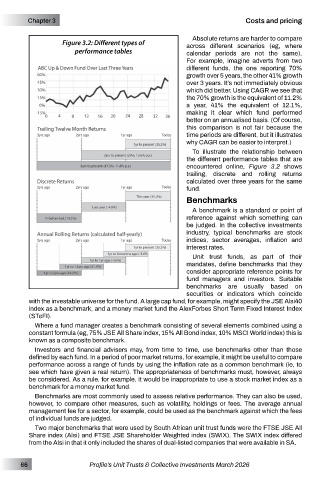
                   Figure 3.2: Different types of     across  different  scenarios  (eg,  where
                      performance tables              calendar  periods  are  not  the  same).
                                                      For  example,  imagine  adverts  from  two
                                                      different  funds,  the  one  reporting  70%
                                                      growth over 5 years, the other 41% growth
                                                      over 3 years. It’s not immediately obvious
                                                      which did better. Using CAGR we see that
                                                      the 70% growth is the equivalent of 11.2%
                                                      a  year,  41%  the  equivalent  of  12.1%,
                                                      making  it  clear  which  fund  performed
                                                      better on an annualised basis. (Of course,
                                                      this  comparison  is  not  fair  because  the
                                                      time periods are different, but it illustrates
                                                      why CAGR can be easier to interpret.)
                                                        To  illustrate  the  relationship  between
                                                      the different performance tables that are
                                                      encountered  online,  Figure  3.2  shows
                                                      trailing,  discrete  and  rolling  returns
                                                      calculated over three years for the same
                                                      fund.
                                                      Benchmarks
                                                        A  benchmark  is  a  standard  or  point  of
                                                      reference  against  which  something  can
                                                      be  judged.  In  the  collective  investments
                                                      industry,  typical  benchmarks  are  stock
                                                      indices,  sector  averages,  inflation  and
                                                      interest rates.
                                                        Unit  trust  funds,  as  part  of  their
                                                      mandates,  define  benchmarks  that  they
                                                      consider appropriate reference points for
                                                      fund  managers  and  investors.  Suitable
                                                      benchmarks  are  usually  based  on
                                                      securities  or  indicators  which  coincide
         with the investable universe for the fund. A large cap fund, for example, might specify the JSE Alsi40
         index as a benchmark, and a money market fund the AlexForbes Short Term Fixed Interest Index
         (STeFI).
           Where a fund manager creates a benchmark consisting of several elements combined using a
         constant formula (eg, 75% JSE All Share index, 15% All Bond index, 10% MSCI World index) this is
         known as a composite benchmark.
           Investors  and  financial  advisers  may,  from  time  to  time,  use  benchmarks  other  than  those
         defined by each fund. In a period of poor market returns, for example, it might be useful to compare
         performance across a range of funds by using the inflation rate as a common benchmark (ie, to
         see which have given a real return). The appropriateness of benchmarks must, however, always
         be considered. As a rule, for example, it would be inappropriate to use a stock market index as a
         benchmark for a money market fund.
           Benchmarks are most commonly used to assess relative performance. They can also be used,
         however,  to  compare  other  measures,  such  as  volatility,  holdings  or  fees.  The  average  annual
         management fee for a sector, for example, could be used as the benchmark against which the fees
         of individual funds are judged.
           Two major benchmarks that were used by South African unit trust funds were the FTSE JSE All
         Share index (Alsi) and FTSE JSE Shareholder Weighted index (SWIX). The SWIX index differed
         from the Alsi in that it only included the shares of dual-listed companies that were available in SA.


       66                 Profile’s Unit Trusts & Collective Investments March 2026

